Battery Basics — How Car Batteries Work
What Is a Car Battery and How Does It Work?
A car battery is a rechargeable lead-acid (or lithium) energy storage device that provides the burst of electrical power needed to start your engine and powers your vehicle's electronics when the alternator isn't running. Understanding the basics of how your battery works helps you maintain it properly — and avoid being stranded with a dead battery.
Battery Voltage Explained
Most automotive batteries are rated at 12 volts, though they actually operate between 11.8V (discharged) and 12.7V (fully charged) at rest. During engine start, voltage temporarily drops to 9-10V. While the engine runs, your alternator recharges the battery and maintains system voltage at 13.5–14.7V.
Key voltage benchmarks:
- 12.7V or higher — Fully charged (100%)
- 12.4V — About 75% charged
- 12.0V — About 25% charged — recharge immediately
- 11.9V or lower — Discharged — at risk of sulfation damage
Battery Chemistry Types
Modern vehicles use several battery technologies, each requiring different charging approaches:
Flooded Lead-Acid (FLA)
The traditional standard. Uses liquid electrolyte (sulfuric acid + water). Common in older vehicles and many budget replacement batteries. Requires regular maintenance checks and is most susceptible to sulfation when left discharged.
AGM (Absorbed Glass Mat)
Electrolyte is absorbed into a fiberglass mat — no free liquid. Handles deep discharge cycles better than FLA, charges faster, and is vibration-resistant. Standard in modern stop-start vehicles. Requires a charger rated for AGM chemistry.
Gel Cell
Electrolyte is suspended in silica gel. Excellent deep-cycle performance, but must be charged at lower voltages than FLA or AGM. Common in marine and RV applications.
LiFePO4 (Lithium Iron Phosphate)
Lightweight, rapid charge, excellent cycle life. Increasingly common in powersports and performance vehicles. Requires a multi-chemistry charger — never charge with a standard lead-acid charger.
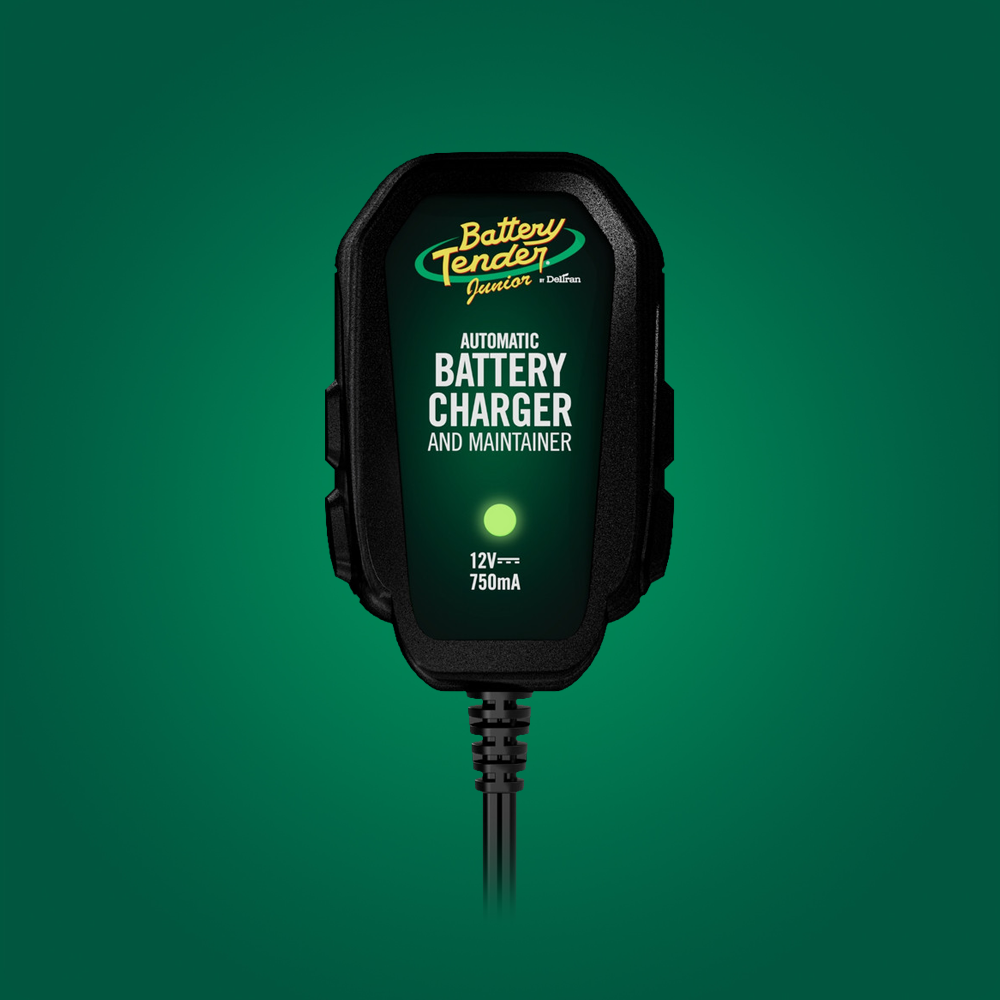
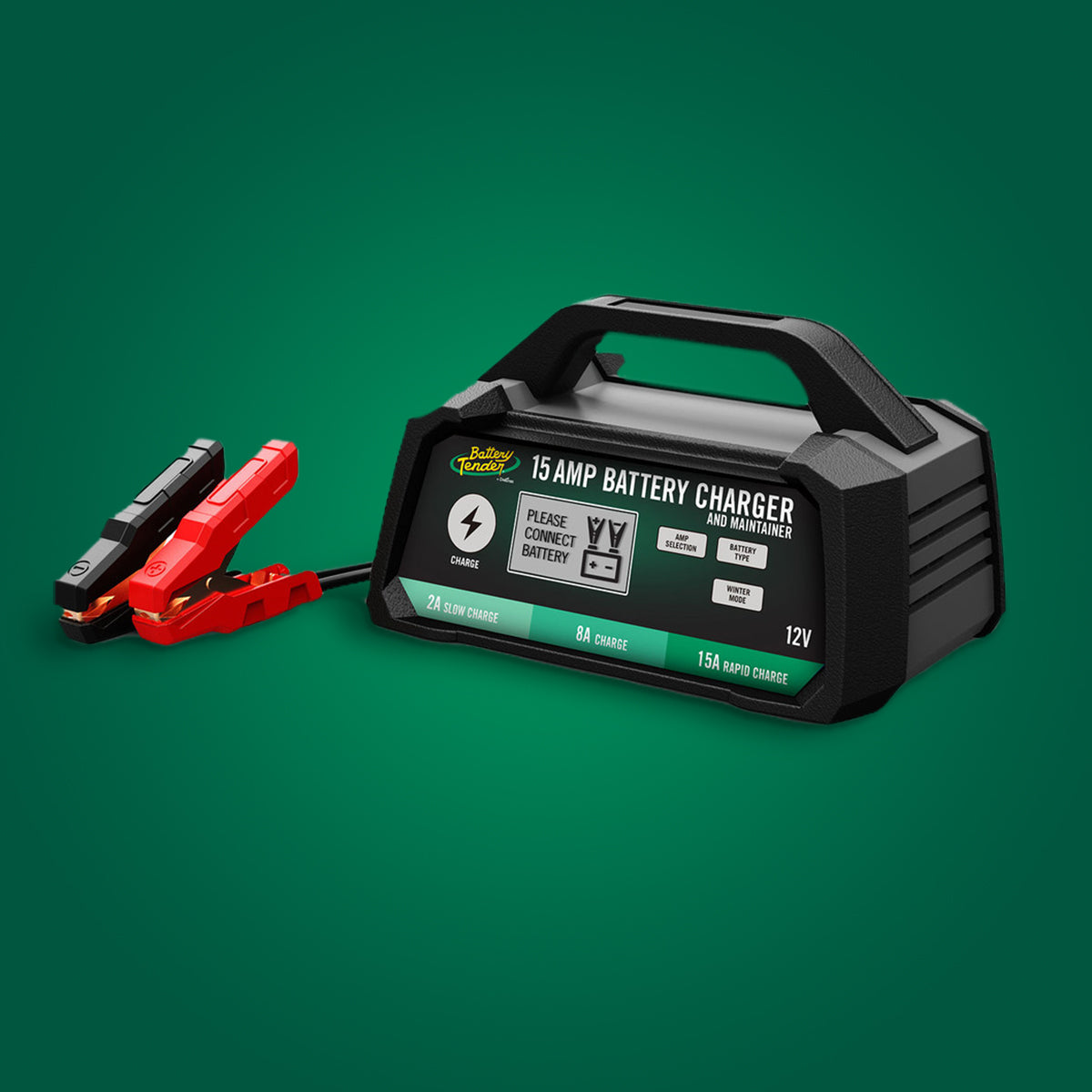
Battery Tender® chargers support all four chemistry types via their multi-chemistry selection mode.
What Causes Battery Discharge?
Batteries lose charge from several common causes:
- Parasitic drain — Electronics drawing small amounts of current continuously (clocks, alarms, computers)
- Short trips — The alternator never fully recharges the battery
- Extended storage — Batteries self-discharge at 1-3% per month even with no load
- Temperature extremes — Cold weather reduces capacity; heat accelerates internal degradation
- Old age — Most batteries last 3-5 years before capacity declines significantly
Understanding Sulfation — The #1 Battery Killer
When a lead-acid battery sits discharged, lead sulfate crystals form on the battery plates. This process — called sulfation — is the primary cause of premature battery failure. Once sulfation hardens, it permanently reduces the battery's capacity and its ability to accept a full charge.
The best defense against sulfation is keeping your battery charged above 12.4V at all times. Battery Tender® chargers use Infinite Sequential Monitoring (ISM) technology to maintain this threshold automatically, preventing sulfation before it starts.
How to Read Battery Ratings
When buying or evaluating a battery, you'll encounter several key specifications:
- CCA (Cold Cranking Amps) — The amps a battery can deliver at 0°F for 30 seconds. Higher = better cold weather starting.
- RC (Reserve Capacity) — How many minutes the battery can power a 25-amp load before dropping below 10.5V.
- Ah (Amp-Hours) — Total energy storage capacity. Common for deep-cycle, marine, and RV batteries.
- Group Size — Physical dimensions standard (Group 24, 27, 31, etc.). Must match your vehicle's battery tray.
Smart Charging vs. Trickle Charging
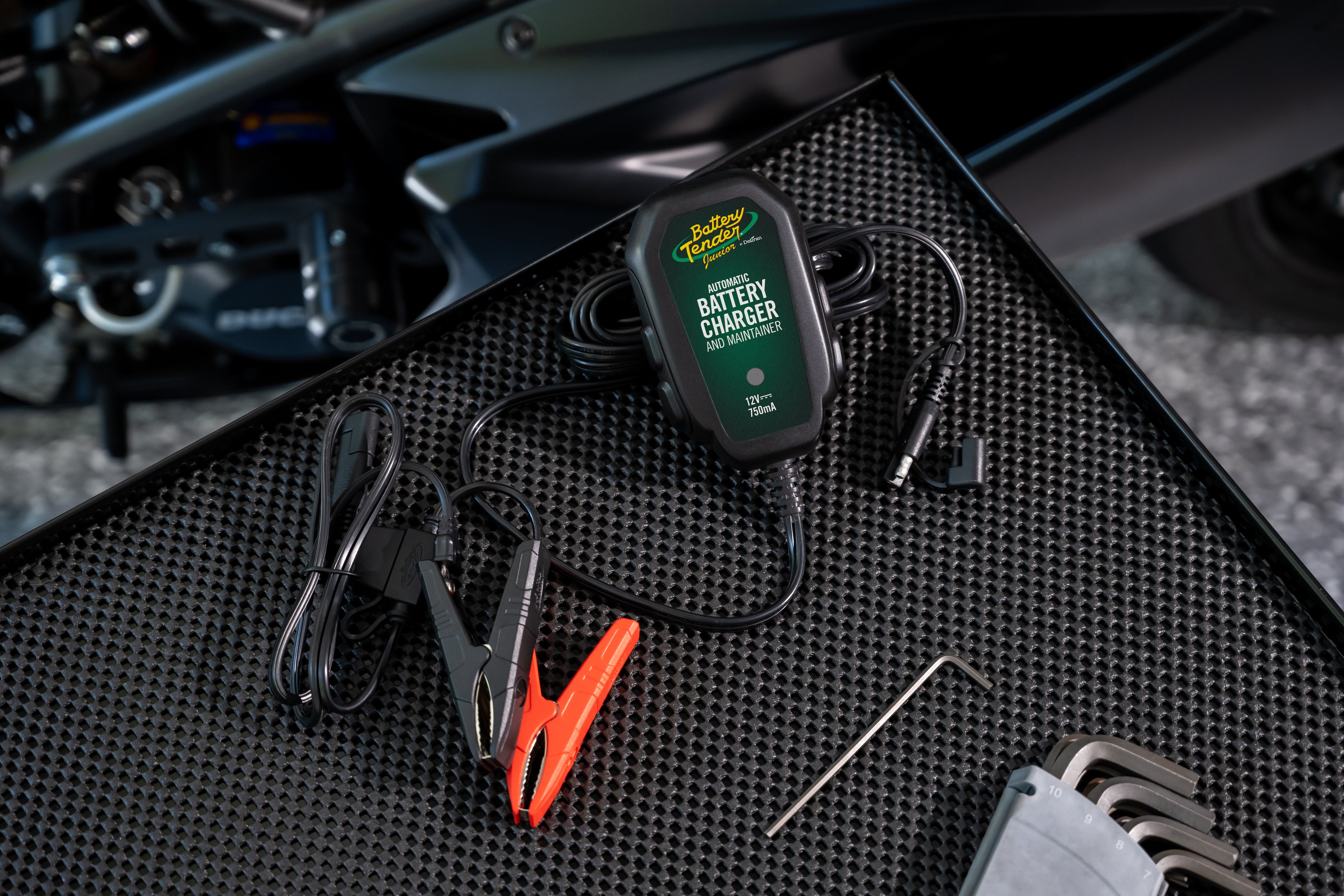
A traditional trickle charger pushes a constant low current regardless of the battery's state — which can cause overcharging and water loss in flooded batteries. A smart charger like Battery Tender® monitors battery voltage and automatically adjusts charging current through four stages:
- Initialization / Soft Start — Tests battery condition, safely recovers deeply discharged batteries
- Bulk Charge — Charges at maximum safe rate until ~80% capacity
- Absorption — Reduces current as battery approaches full charge, preventing gassing
- Float / Maintenance — Holds battery at full charge indefinitely without overcharging
This four-stage process, combined with ISM monitoring, is why Battery Tender® chargers can be safely left connected for months — ideal for seasonal vehicles, stored classics, and fleet maintenance.
How Long Does a Battery Last?
Under normal conditions, most car batteries last 3-5 years. Factors that extend battery life:
- Regular maintenance charging with a smart charger during storage periods
- Keeping the battery clean and terminals corrosion-free
- Avoiding deep discharges (below 12.0V)
- Parking in a garage during extreme cold
Frequently Asked Questions About Battery Basics
Can I leave a Battery Tender® connected indefinitely?
Yes. Battery Tender® chargers are designed for long-term connection. The ISM float mode maintains your battery at full charge without overcharging or gassing — safe for weeks, months, or the entire storage season.
What's the difference between a maintainer and a charger?
A charger is designed to rapidly restore a discharged battery. A maintainer (like Battery Tender®) both charges AND maintains — it can recover a dead battery and then automatically transition to float mode to keep it at full charge.
How do I know if my battery needs replacing?
Signs include: slow cranking, requiring frequent jump-starts, battery age over 4 years, visible swelling or corrosion, or a battery tester reading below 12.4V after a full charge cycle.
Do I need a special charger for AGM batteries?
Yes. AGM batteries require a charger that recognizes AGM chemistry and adjusts its voltage profile accordingly. All Battery Tender® multi-chemistry chargers support AGM, as does the Battery Tender® Plus with its automatic detection.